

From Idea to Scalable Product: Building Systems That Grow With Your Business
Every successful digital product begins with an idea, but not every idea evolves into a scalable and sustainable system. Many businesses rush into development with a focus on launching quickly, only to encounter limitations when their product starts gaining traction. What initially works for a small user base often fails under increased demand, leading to performance issues, costly rework, and stalled growth.
The journey from idea to a scalable product requires more than just development-it requires a structured approach that balances speed, architecture, and long-term vision. Businesses that plan for scalability from the beginning are better positioned to adapt, grow, and maintain performance as their user base and operational demands increase.
Validating the Idea Before Development
Before writing a single line of code, it is essential to validate the idea and ensure that it solves a real problem. This involves understanding target users, identifying market needs, and defining clear value propositions. Without proper validation, businesses risk investing in products that lack demand or fail to deliver meaningful impact.
Validation can include market research, competitor analysis, user feedback, and building simple prototypes or proof-of-concepts. This early-stage clarity helps define product direction, prioritize features, and avoid unnecessary complexity during development.
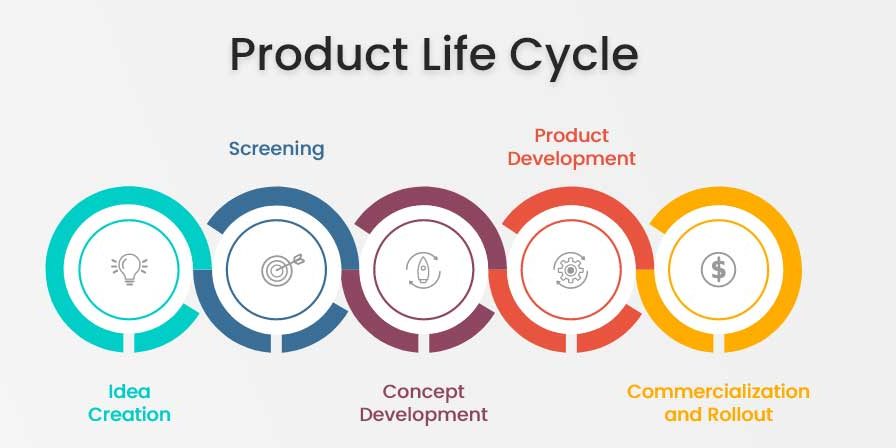
A strong product is not built by speed alone-it is built by clarity, structure, and scalability.
Once the idea is validated, the next step is to design a solid technical foundation that supports both current requirements and future growth. This involves careful selection of the appropriate technology stack based on scalability, performance, and long-term maintainability, along with defining a clear and structured system architecture. Decisions made at this stage directly impact how efficiently the application can evolve over time, making it critical to prioritize flexibility, security, and performance from the outset rather than treating them as afterthoughts.
A layered and modular architecture allows different parts of the system to operate independently, making it easier to scale, maintain, and upgrade without disrupting the entire application. Well-designed databases, efficient data flow management, and structured APIs ensure smooth communication between system components, while backend optimization techniques such as caching, asynchronous processing, and load handling enable the system to manage increasing user activity and data volume without performance degradation.
Developing a Minimum Viable Product (MVP)
Instead of building a full-featured product from the start, businesses should focus on developing a Minimum Viable Product (MVP) that includes only the core features necessary to deliver immediate value to users. This approach minimizes initial development complexity, reduces time-to-market, and allows organizations to test their product in real-world conditions without committing excessive resources upfront.
An MVP also creates a structured feedback loop, enabling businesses to gather real user insights, identify usability gaps, and validate assumptions about product functionality and market demand. By iterating based on actual usage data and user behavior, organizations can make informed improvements, refine features, and gradually expand the product in a controlled and efficient manner, avoiding unnecessary rework and resource wastage.
Scaling the Product with Growth
As the product gains traction and user adoption increases, scalability becomes a critical factor in maintaining performance and user experience. Systems must be capable of handling higher traffic volumes, larger datasets, and expanding feature sets without introducing latency, downtime, or instability. Achieving this requires a combination of architectural foresight, performance monitoring, and proactive optimization strategies.
Cloud-based infrastructure, combined with techniques such as load balancing, horizontal scaling, caching mechanisms, and database optimization, ensures that systems remain responsive and reliable under growing demand. Scalability is not a one-time implementation but an ongoing process that requires continuous evaluation, testing, and refinement to align with evolving business requirements and user expectations.
Continuous Improvement and Optimization
A successful digital product is never static-it evolves continuously based on user interaction, performance data, and changing market dynamics. Regular updates, feature enhancements, and system optimizations are essential to ensure that the product remains relevant, competitive, and aligned with user expectations over time.
By leveraging analytics, monitoring tools, and user feedback, businesses can gain valuable insights into system performance, engagement patterns, and potential bottlenecks. This data-driven approach enables informed decision-making, allowing organizations to improve usability, optimize workflows, and enhance overall product value. Continuous improvement creates a compounding effect, where small optimizations lead to significant long-term gains in efficiency and performance.
Conclusion
Transforming an idea into a scalable product requires a balanced combination of strategic planning, technical expertise, and disciplined execution. Businesses that invest in building strong technical foundations and scalable architectures from the beginning are better equipped to handle growth, adapt to evolving demands, and maintain consistent performance as their operations expand.
VentureTechGlobal supports businesses throughout this journey by designing, developing, and scaling digital products that align with long-term business objectives. Through a structured engineering approach, modern technology adoption, and a focus on performance and reliability, organizations can confidently transform ideas into robust, high-performing systems that drive sustainable growth and long-term success.
Leave a Reply